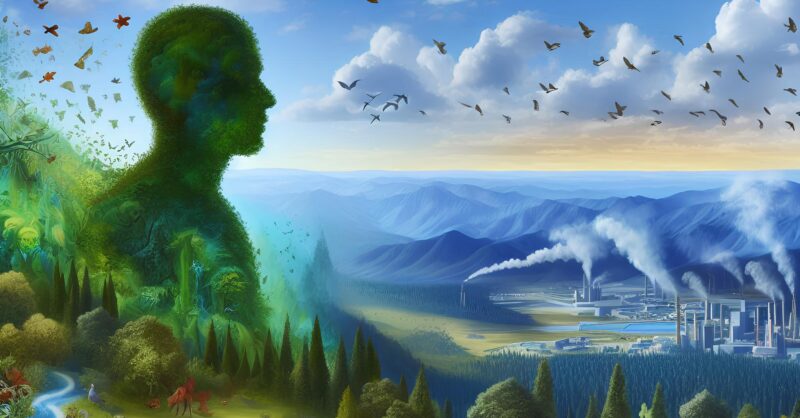
We live in a world that places economic growth above all else. Pollution, poisoning nature, depleting resources, and exploiting sentient beings are seen as unfortunate but acceptable costs in the pursuit of what’s called “progress.”
This exploitative mindset treats nature and animals as free commodities—opportunities to be consumed and traded until nothing remains. It prioritizes short-term profit over long-term wellbeing, regardless of the harm inflicted on ecosystems, animals, or people.
We see forests being cut down, rivers polluted, air poisoned, and natural habitats destroyed to make way for commercial, industrial, or entertainment projects. We see ecologically and geologically valuable sites turned into party venues or private developments, ignoring the damage to wildlife, biodiversity, and even the Earth’s geological heritage.
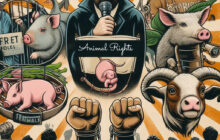
We see billions of animals bred and killed in factory farms for economic gain, while animal agriculture drives deforestation, pollutes air and water, and accelerates climate change.
We see oceans plundered, entire species of fish wiped out, and marine ecosystems collapsing.
We see wild animals stripped of their freedom and exploited for entertainment—from dolphin shows to zoos and circuses.
We see companion animals commodified and manipulated as if they were fashion accessories.
This mindset is a human-made problem. And anyone who thinks this way is part of the problem.
Let’s Change the Lens and Build an Economy That Respects Humans, Animals, and the Planet
A World Where:
- Agriculture is sustainable, respecting soil, water, and climate, producing food without harming the Earth or animals, while enhancing biodiversity.
- Energy is renewable, drawn from the sun, wind, and water, distributed fairly and used efficiently without waste or pollution.
- Tourism protects nature, encouraging reflection and respect, safeguarding ecological and cultural heritage instead of exploiting it.
- Industry is clean, producing what we need without polluting air or water, upholding the rights of humans and animals, and reducing waste through recycling.
- Sanctuaries and protected areas are built and maintained, offering safe havens for wildlife and endangered species, shielding nature from commercial exploitation.
Individuals are conscious, recognizing that every daily choice is a moral stance:
-
- Choosing plant-based food that’s compassionate and low-impact.
- Rejecting products made through exploitation or harm.
- Reducing unnecessary consumption and waste.
- Refusing to exploit animals for entertainment, fashion, or food.
- Raising children to respect the environment and animals—not to exploit them for personal gain.
- Questioning habits instead of blindly following them.
- Participating in awareness campaigns and demanding policies that protect nature, animals, and people.
A world not built solely through policy, but through a new mindset—one that sees every living being as valuable, every natural resource as a trust, and every action as a chance to protect life rather than consume it.
Let’s change the lens… because true wealth isn’t profit—it’s life itself.
Recommended Reads: Unveiling the Oppressive Mindset: The Hidden Chains of Animal Exploitation